
As much as I could, I abandoned conscious intent; at times I even abandoned my right hand. And, as objects, images and processes emerge from these experiments, they tell some sort of evolutionary story. Primordial forms materialise in clay, and Lego objects experiment with pattern and structure. Collections of tumbled and polished bricks evoke human settlement and activity, while other works explore evolution’s crossroads and culs de sac alike. High seriousness meets the one-liner, and geological report and mythological account are accorded equal weight in images of the cosmos and its inhabitants made in materials as diverse as bronze, concrete, clay and skateboard wheels.
Read a review by Ashraf Jamal here.
Photographs by Hayden Phipps, courtesy of WhatiftheWorld.


 Asterism and (detail), 2015, skateboard wheels, copper, hardware, dimensions variable
Carved skateboard wheels had long served as analogs of bodies responding to gravity in my work. Here they are suspended in space: members of a small constellation, playing with the light.

Lion, 2015, bronze, skateboard wheel, hardware, approx. 17 x 13 x 37cm

Asterism and Lion, installation view
Lion, with his skateboard wheel mane, sits at the centre of the constellation described above. The vague resemblance of this to the sun, and the regal qualities associated with this animal lend him mythical status. Lion was later recruited for my ‘Zoophilia’ show which specifically explored my relationship with animals.
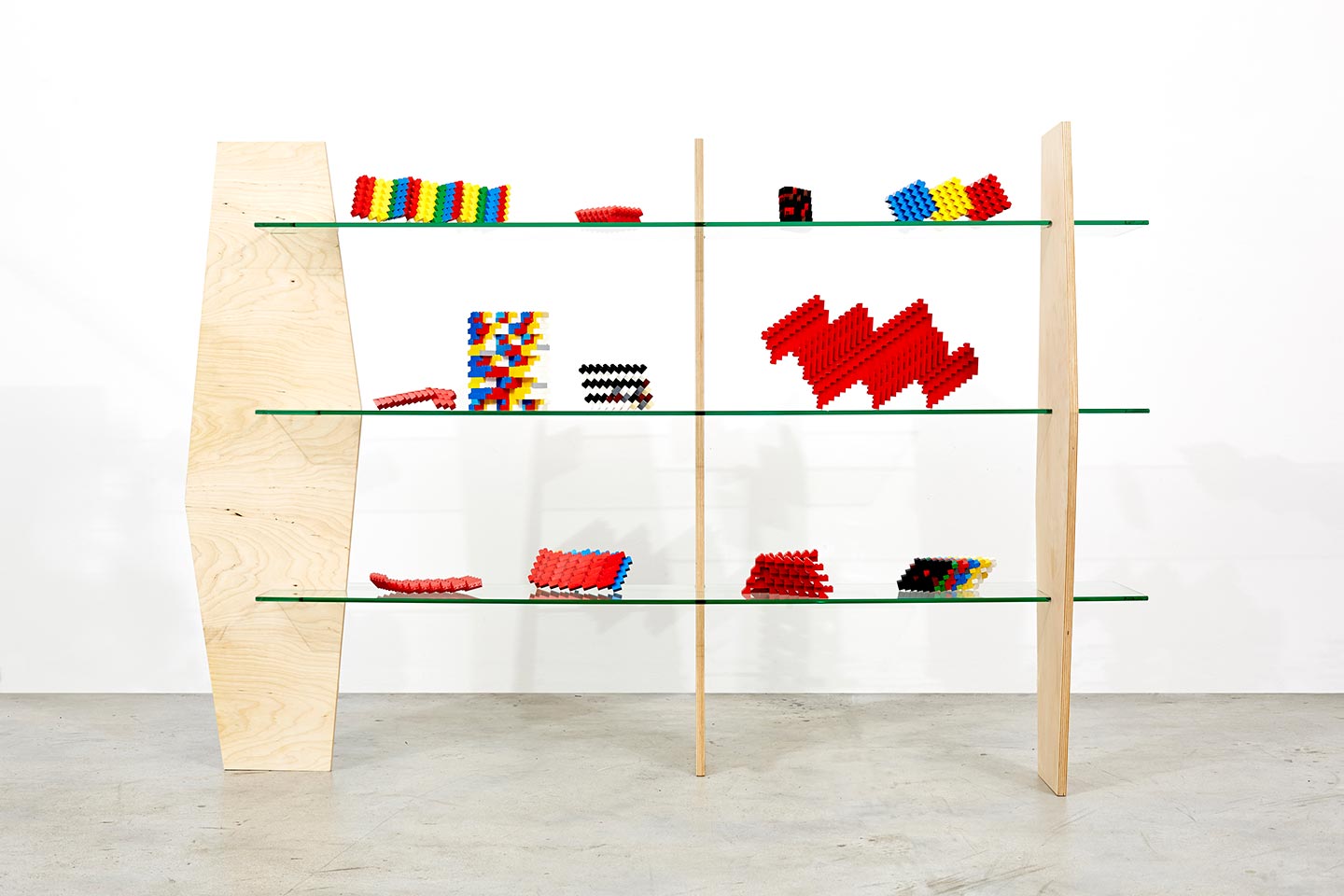 Lego Lab, 2015, Lego, plywood, glass, 110 x 160 x 40cm
Lego Lab is a repository of experiments in form, colour and shape. Without being too literal, I fancy they make reference to simple molecular and cellular forms and arrangements. Most of the Lego here is from my childhood collection, and some of that was inherited from my older brother, and so dates back to the ’60s! A family archaeology, if you like.
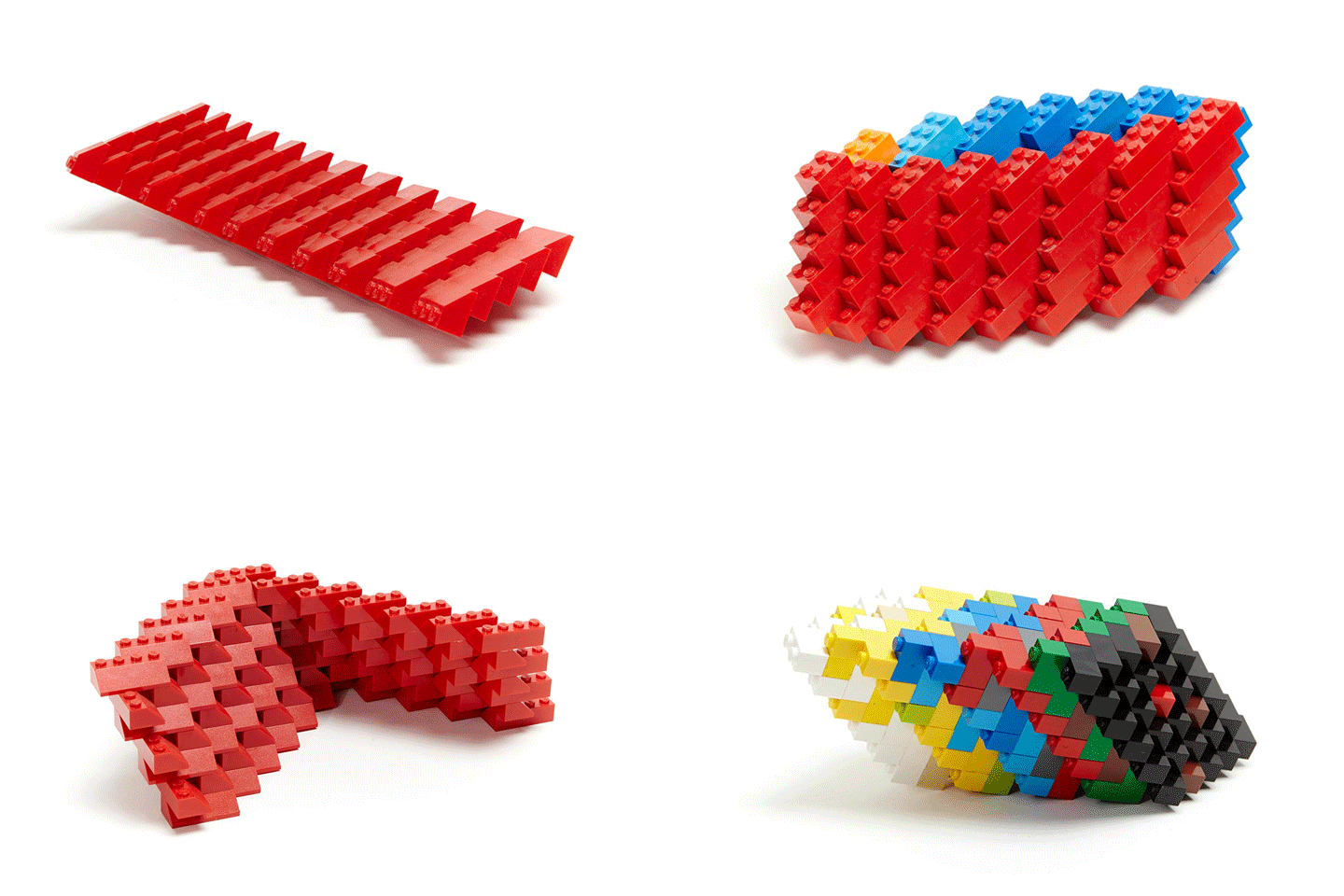

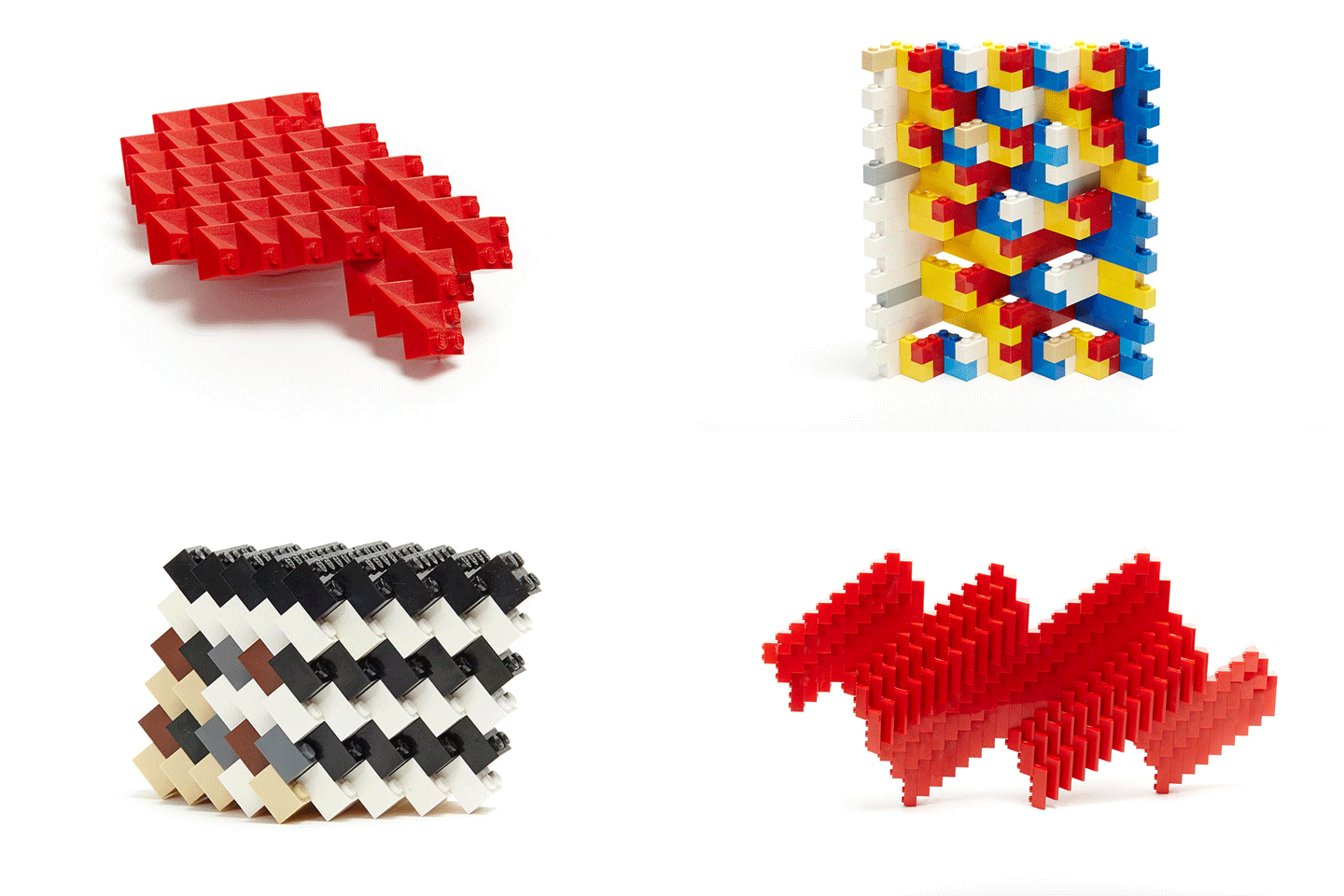
Lego Lab (details), 2015

Distributary, 2014 – 2015, polyethylene foam, hardware, 189 x 183 x 73cm
This large bifurcate structure seems to suggest a choice or perhaps diverging paths, a defining feature of the evolutionary process – natural selection. I later explored this and how it relates to my own creative process in my show ‘The Road to Natural Selection is Fraught with Random Mutation’. When looked at from above. one can see this work as drawing into three dimensions my Tributary linocut, also presented on this show.
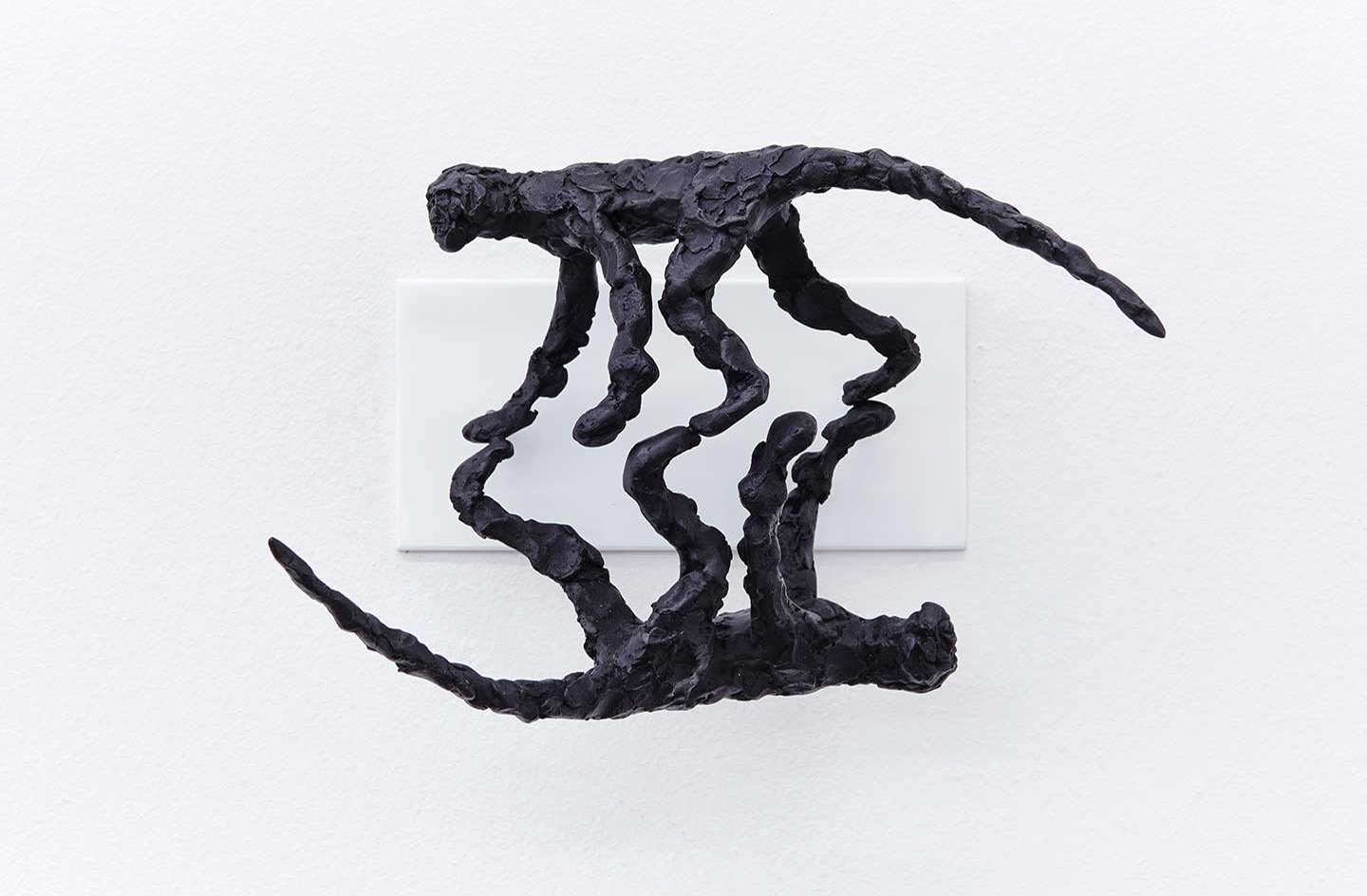 Undermonkey, 2015, bronze, brass, hardware, approx. 17 x 26 x 17cm
The monkey and its reflection took inspiration from an image of my cat perched atop her reflection on our kitchen floor. While we humans fancy ourselves as civilised and sophisticated, we are reminded at every turn of our simple animal needs and shortcomings. It’s as though we are mocked by our primate ancestors. This work would later be shown on my ‘Zoophilia’ show which explored my personal and cultural connections with non-human animals.
 Terminates, 2014, brick clay, hardware, dimensions variable
I made these objects rather crudely and often with my left hand due to a shoulder injury on the other side. I was able to acquire unfired bricks from De Hoop Steenwerwe who also fired these rather odd objects without asking too many questions. These I worked with my sculptor’s mallet, in one case aided by a carved skateboard wheel. They looked to me like early experiments in animal tails or extremities.


Sames and (detail), 2014, brick clay, hardware, dimensions variable
These were also made with unfired bricks and a sculptor’s mallet. I had limited control over how the bricks reacted to my manipulations, but the process soon revealed a kind of grain in the clay, and the bricks tended to split in similar ways. These seemed to me like early experiments in form and material, and a consistent vocabulary started emerging in a way I likened to the evolutionary process of random mutation.

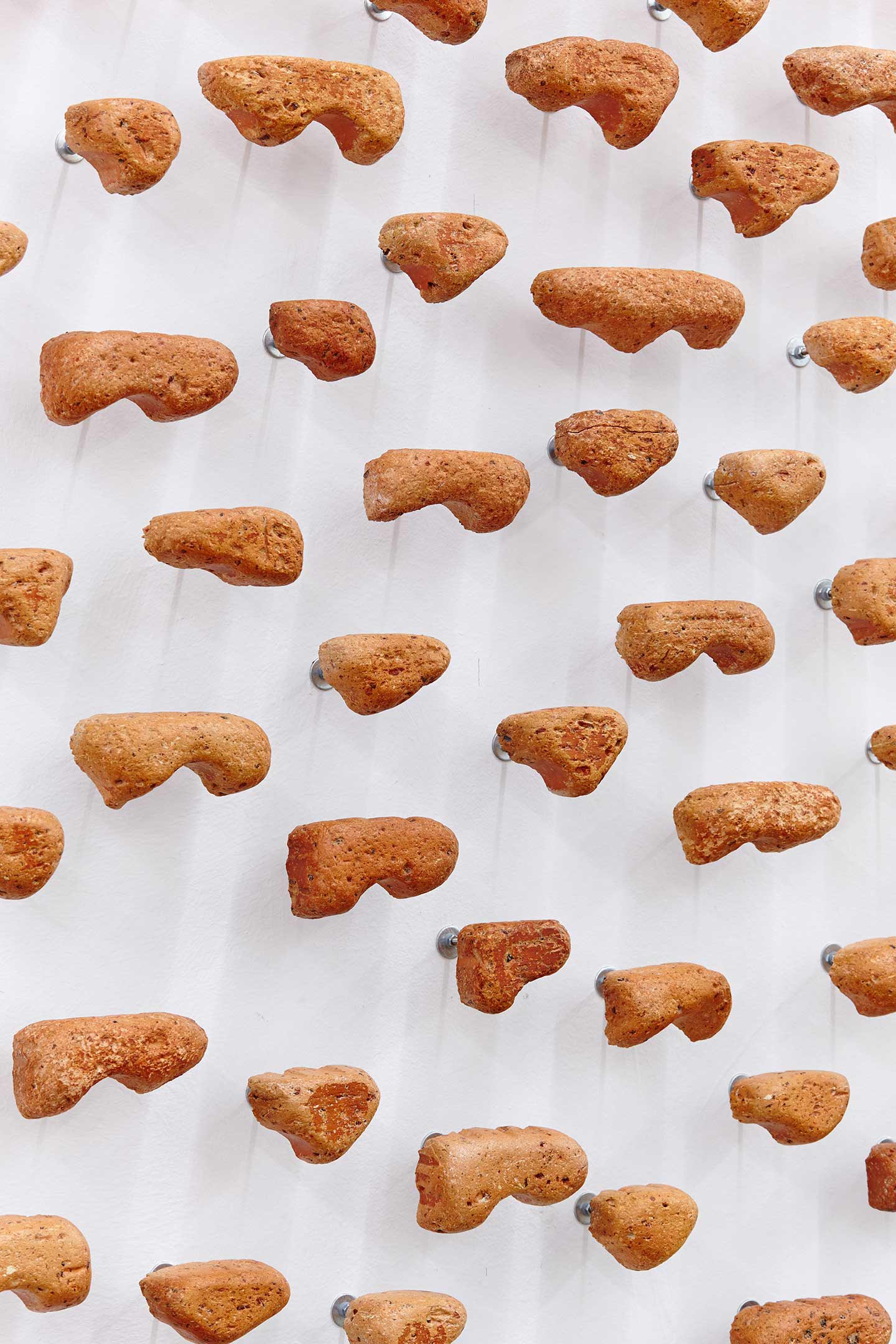
Ruminants (and detail) 2015, brick, hardware, dimensions variable
Like many of us, I had collected tumbled bricks from the beach. But when I needed them, I couldn’t find enough! So, I made my own using broken bricks I found on the streets and a friend’s heavy duty tumbler. These fragments were suggestive of early images of herd animals. I arranged them in a field that recalled a cloud-filled sky. I was thinking of how we sometimes liken the shape of clouds to other things, and how older peoples identified mythological images in the night sky, a form of pareidolia.
 Tributary, 2015, linocut, 79 x 110cm
This was re-working of my earlier linocut Solid which I’d exhibited in an earlier show called ‘Tone’. As described in relation to Tributary above, this work could be seen as a cross-section through that large three-dimensional object, representing a particular instant in its evolution.

Tributary, detail
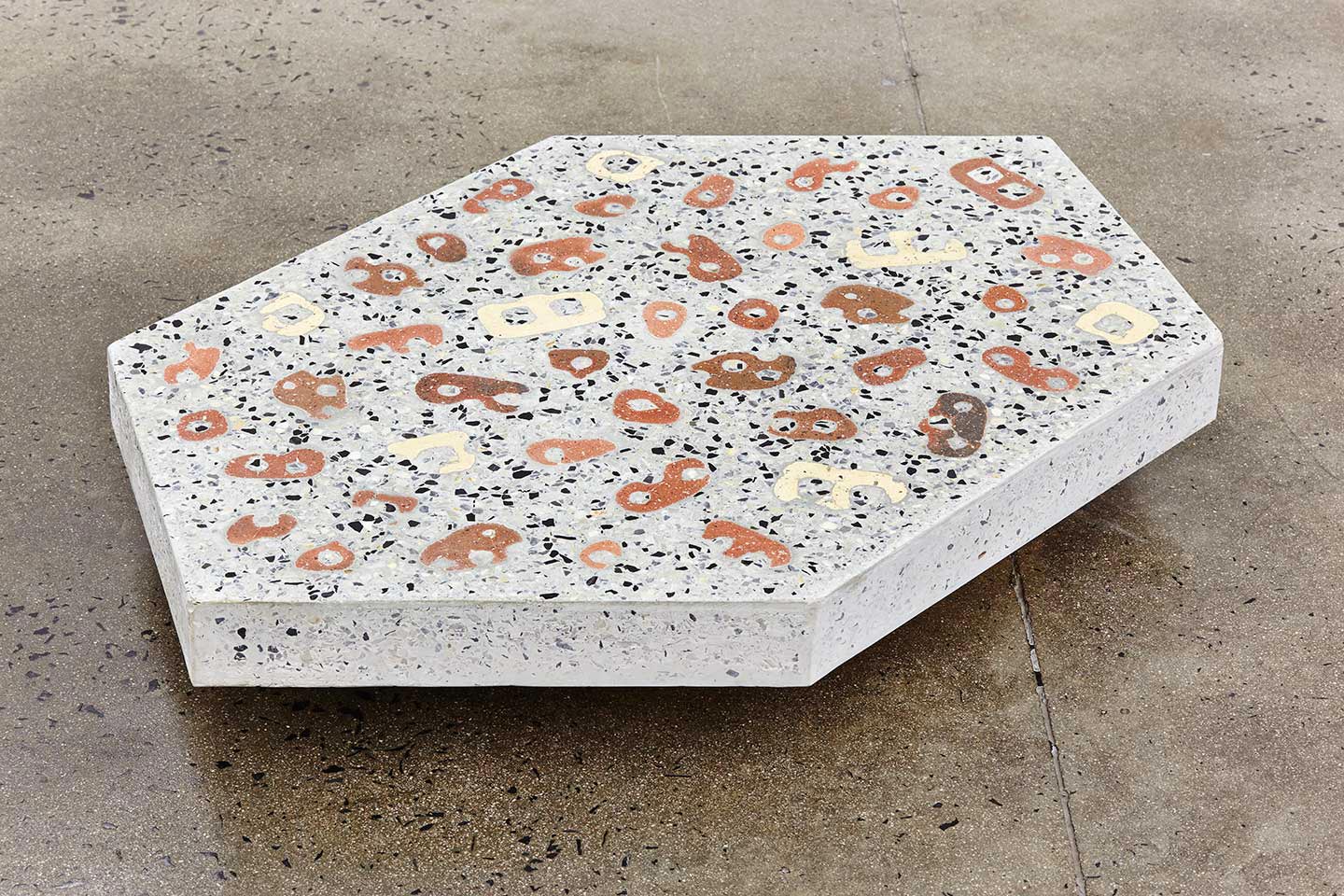 Hominids, 2015, concrete, bricks, 102 x 66 x 8cm
Among the bricks I tumbled for Ruminants, described above, were some that bore a resemblance to skull fragments. I embedded these in a concrete matric which I polished off to a flat surface, creating a kind of geological stratum.
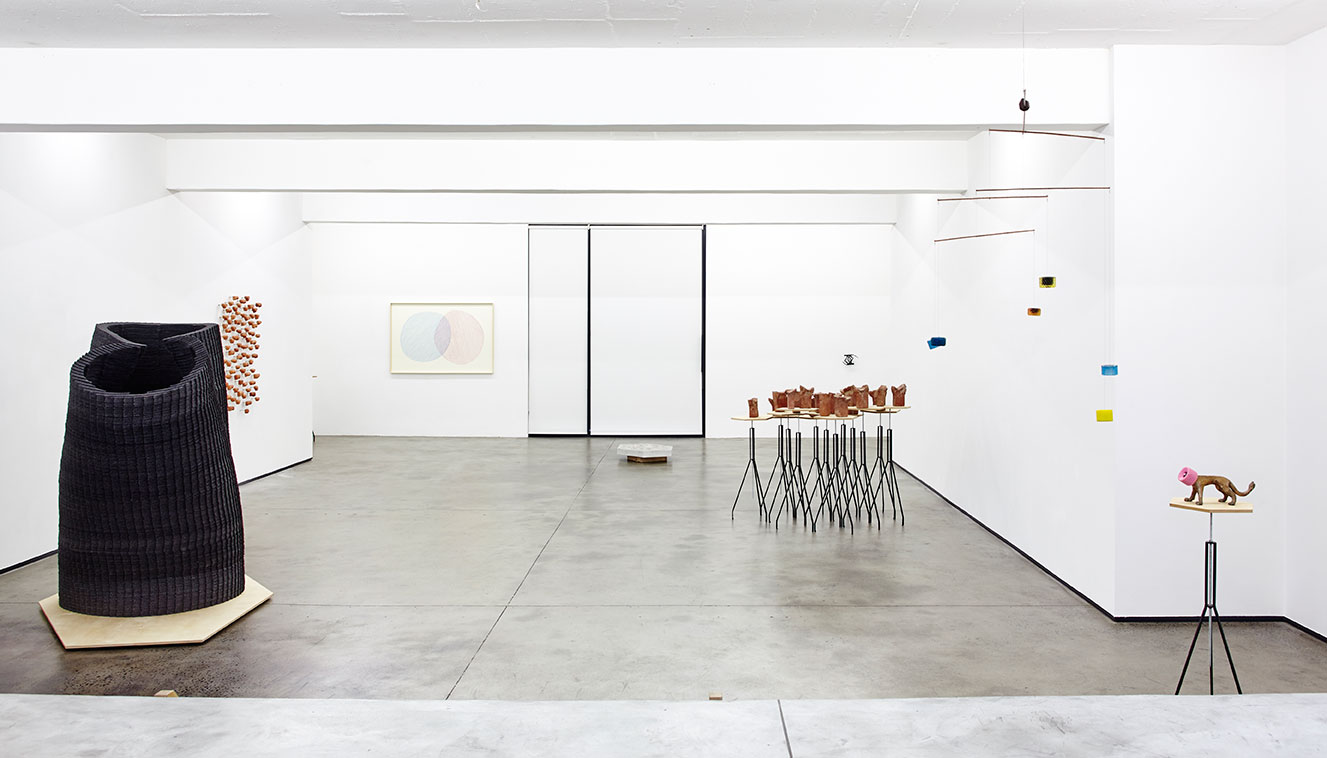 Elemental, installation view, 2015
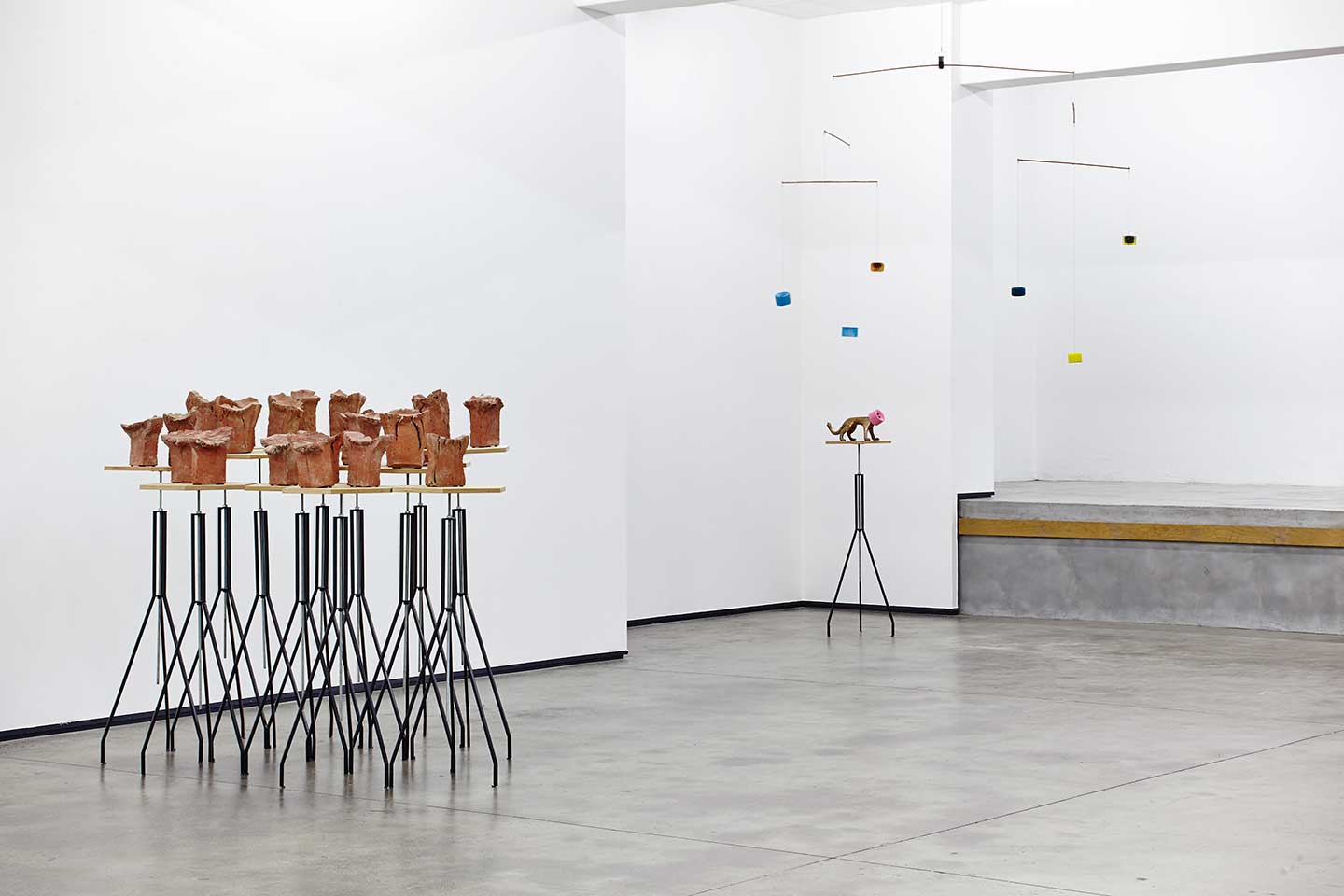
Elemental, installation view, 2015

Elemental, installation view, 2015
 Paul Edmunds