
I began with a box of Foamcore scraps from studiomate Sue Williamson’s studio up the passage. Working with a cutting knife and hot glue, I soon developed a series of small, latticed structures, made from diamond-shaped sections of the material. The nature of these seemed to lend them to sand-casting in metal, and the constraints of that process bore further influence on the objects I went on to produce. A selection was cast in bronze, and one was enlarged to be produced in cast-iron.
While these non-representational objects owe much of their appearance to the process of their production, each plays with conventions of depicting three dimensions in two-dimensional space. Such illusionism holds the eye and is both an ideal entry point and perfect resting place.
Pics by Matthew Bradley, courtesy of WhatiftheWorld.
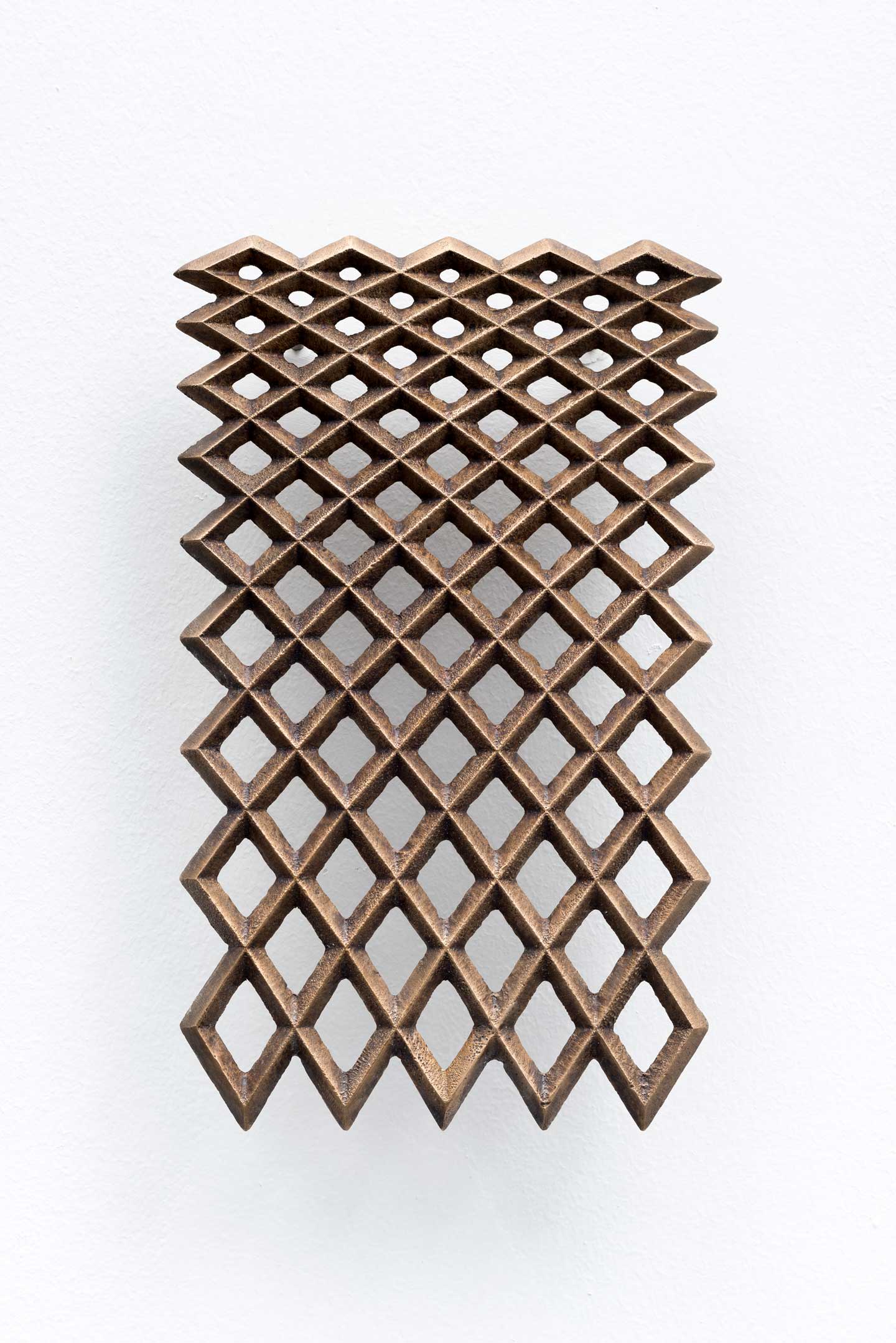
Cascade, 2018, bronze 230 x 140mm
While suggesting a gently curving surface, this construction remains resolutely flat
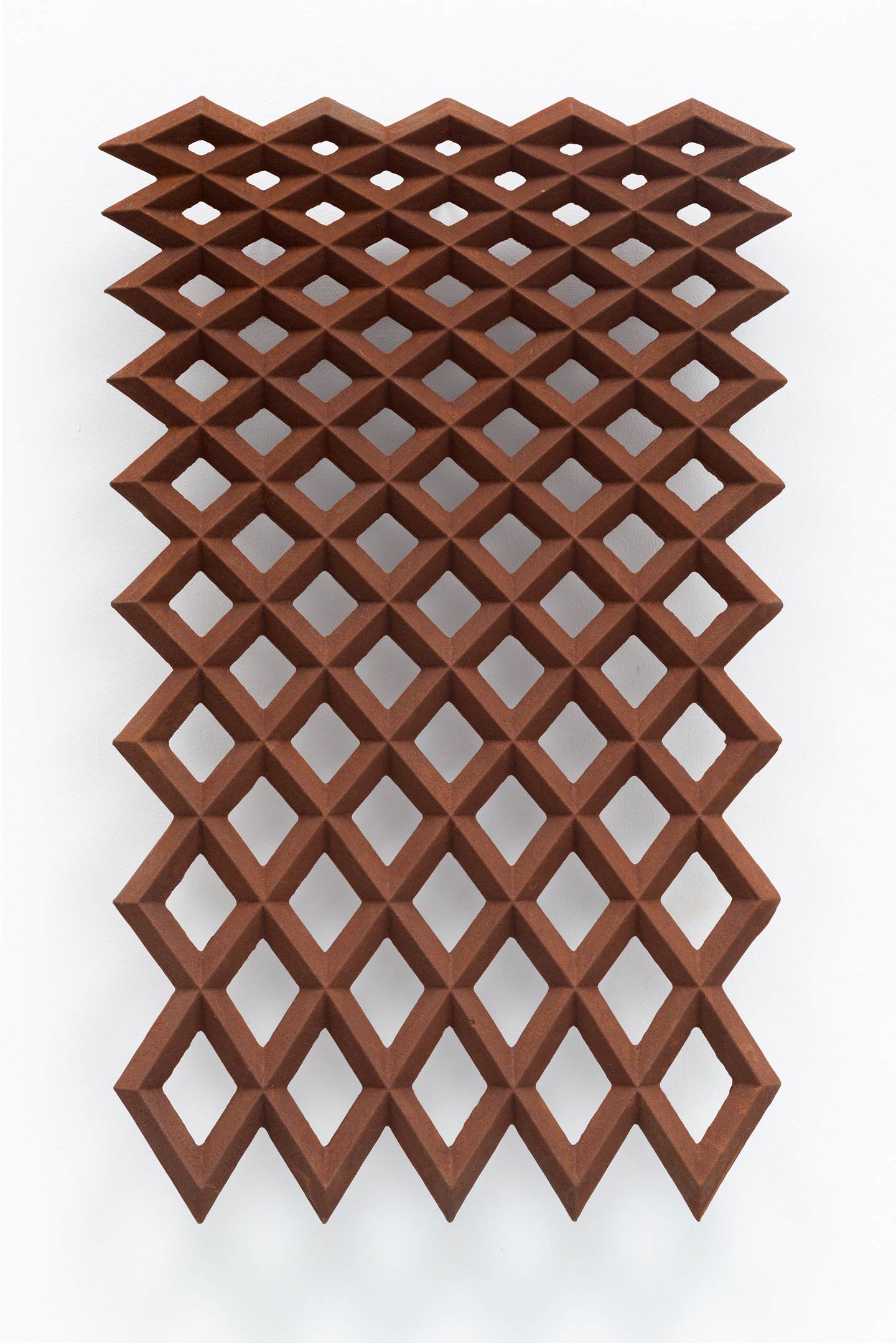
Cascade, 2018, cast-iron, 710 x 440mm
While suggesting a gently curving surface, this construction remains resolutely flat, but on a larger scale than the previous work, and in a material more associated with building vernacular.
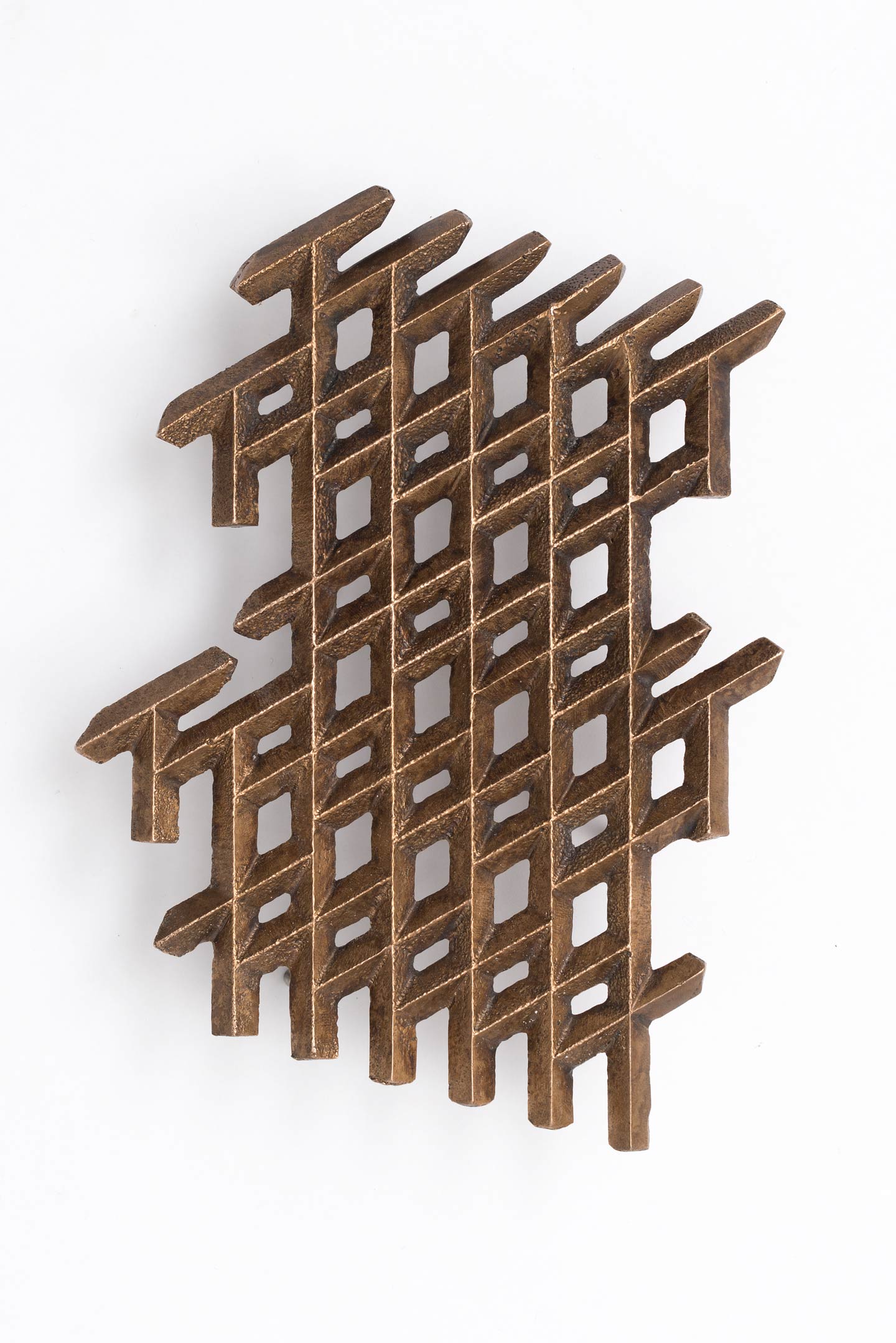
Colonnade, 2018, bronze, 160 x 120mm
The elements used here read as simple post-and-lintel structures, and while their arrangement in rows suggests their arrangement in space, the isometric constraints impose flatness.
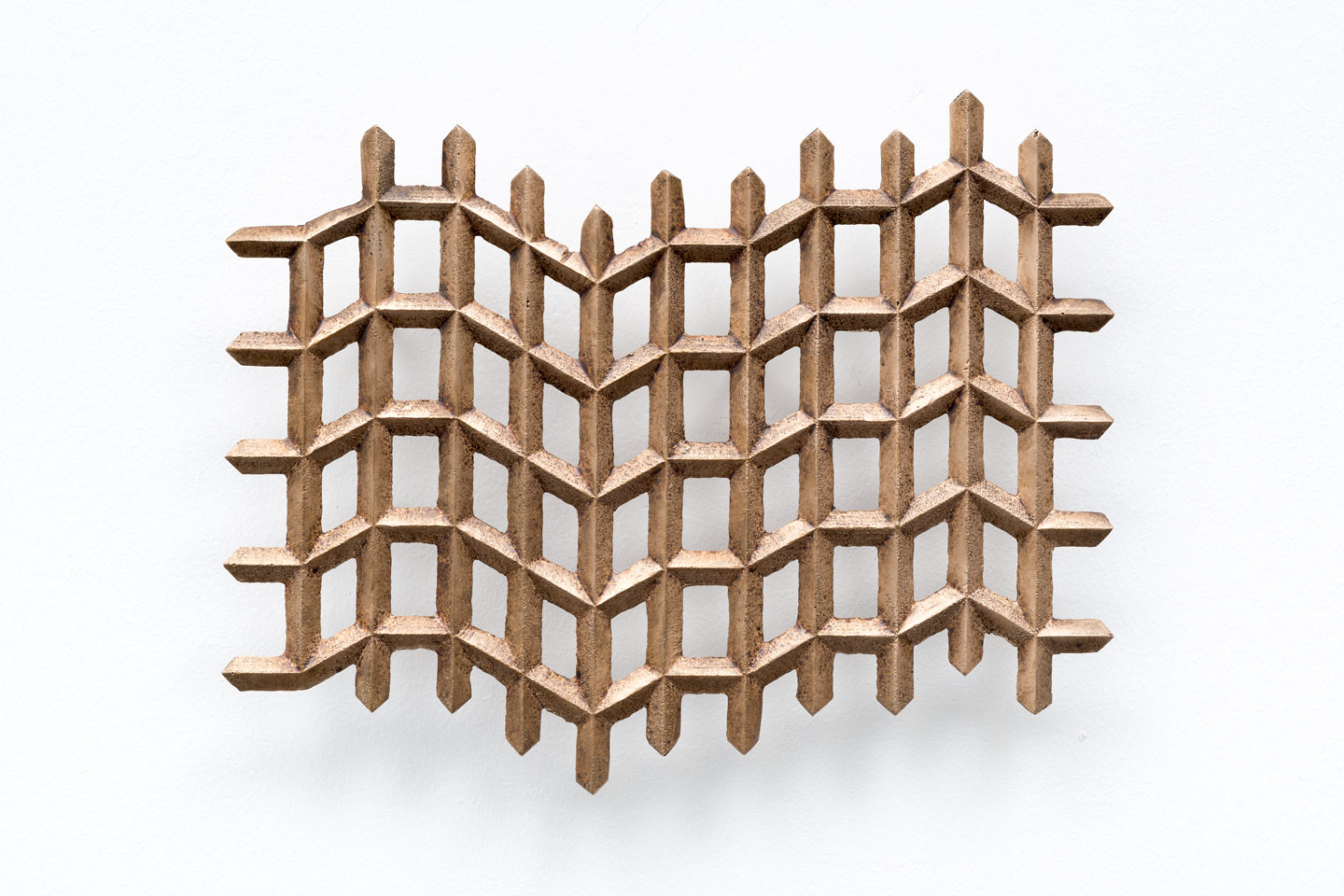
Iso, 2018, bronze, 210 x 250mm
This fence-like structure plays with an illusion of three-dimensionality but ultimately occupies a flat plain.
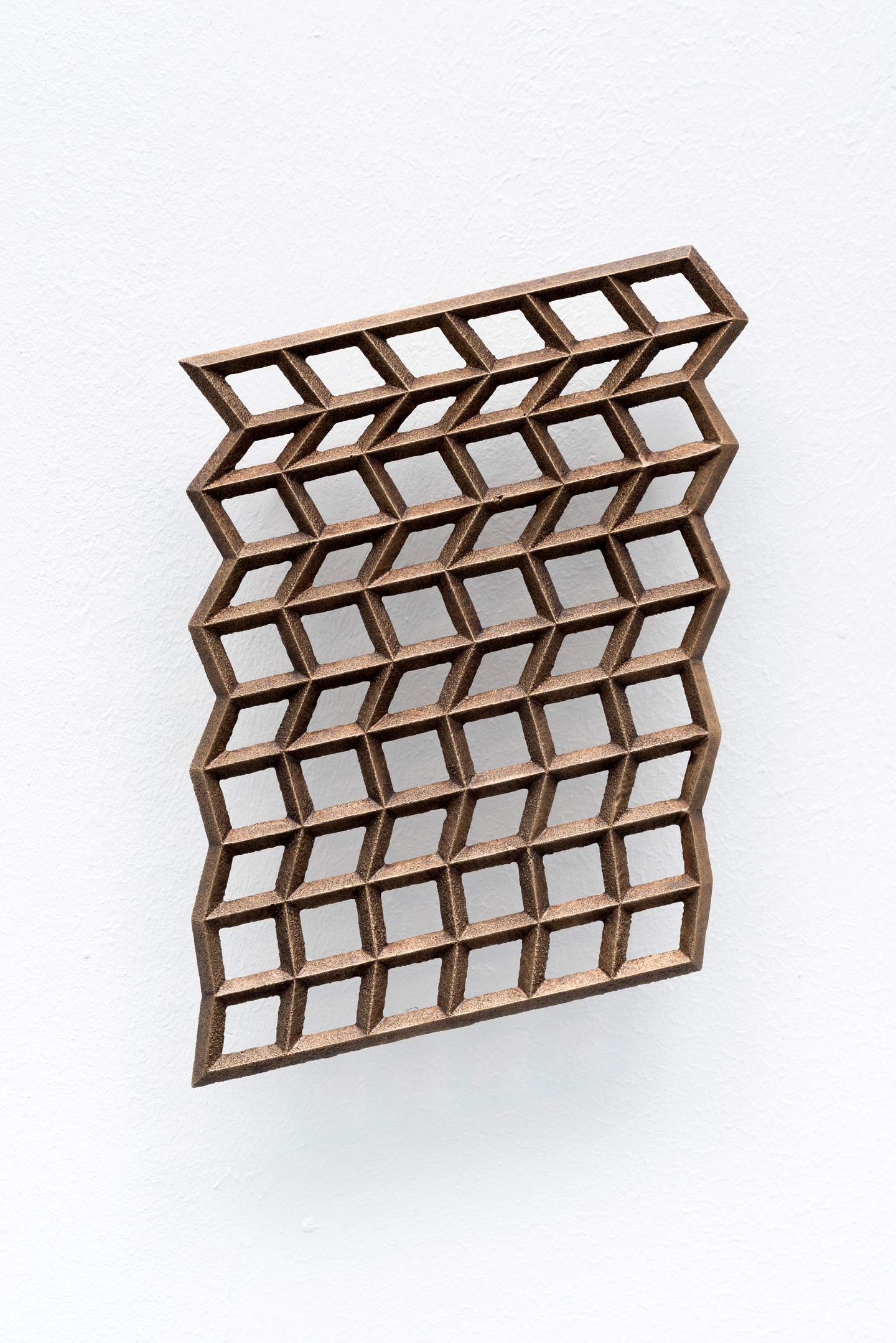
Topo, 2018, bronze, 250 x 170mm
This work too plays with an illusion of three-dimensionality. The title and the apparent orthogonal relationship of the verticals and horizontals allude to topography, and the structure suggests a partly unfurled chart.
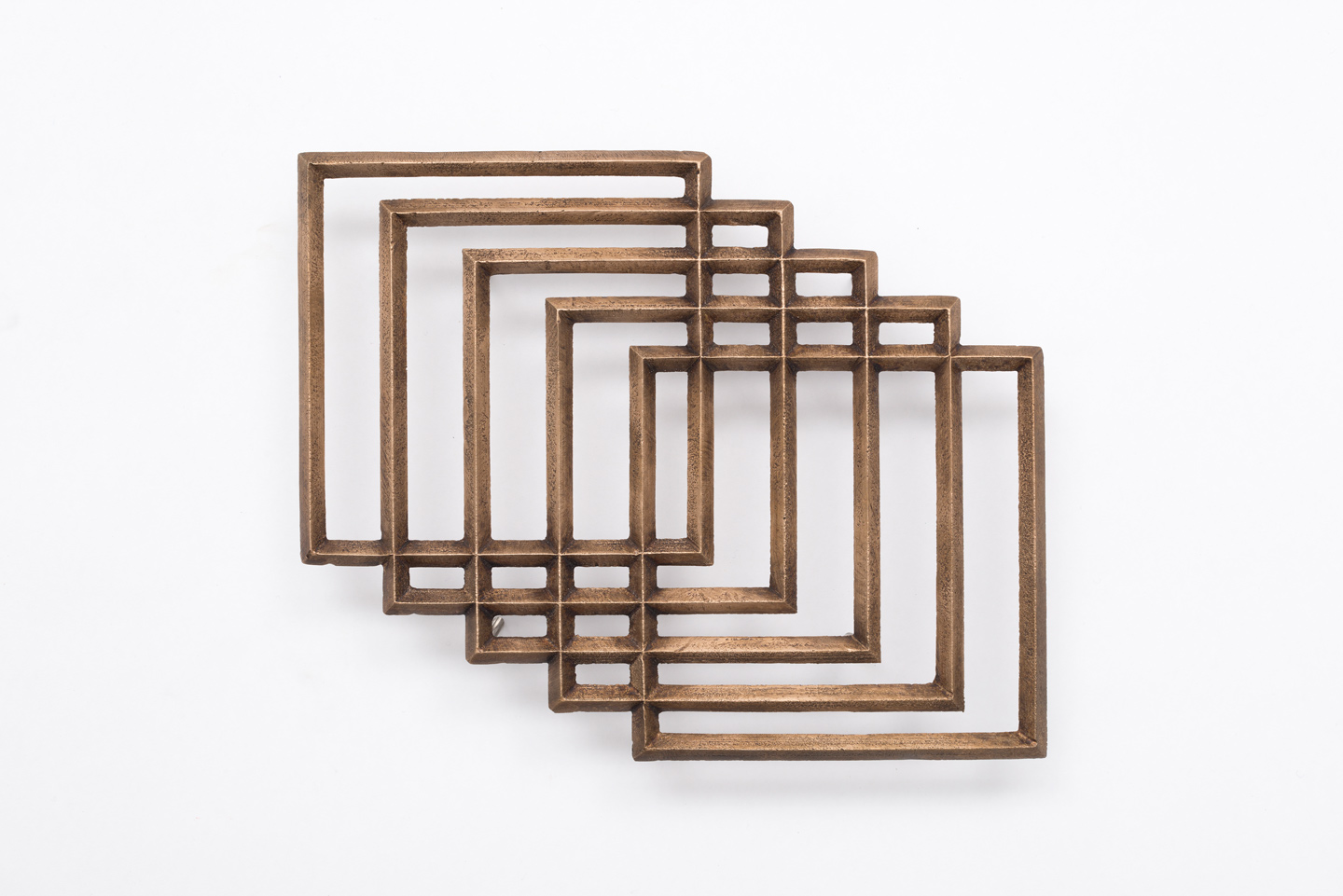
Lineate, 2018, bronze, 180 x 220mm
While the repeated square motif suggests that this object recedes into space, it also reminds us repeatedly that it’s actually flat!
 Paul Edmunds